
Table of Contents
Parenting (whether biological or adoptive) comes with a great deal of resilience. You’re never prepared for the journey ahead, and surprisingly, you won’t be, regardless of the number of children you have. Every baby is unique and comes with different needs. Today, we venture into a neurological condition that is commonly known but rarely understood.
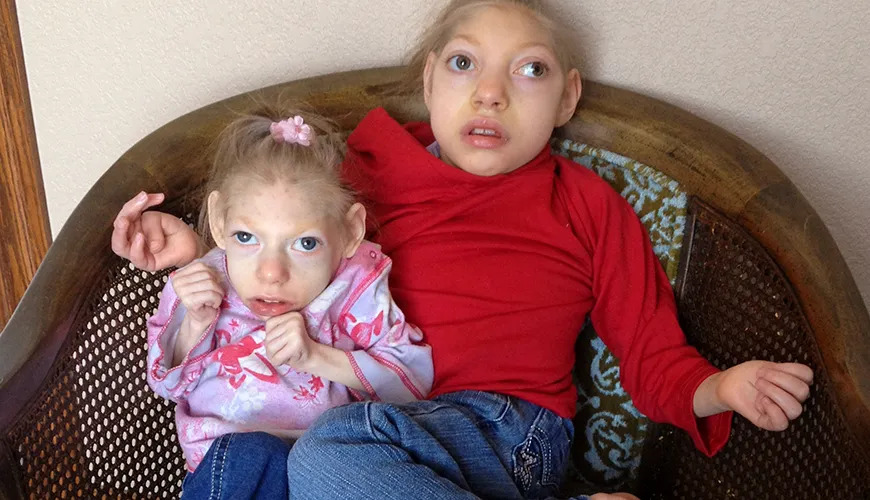
Microcephaly is a neurological condition that affects the size of the baby’s head Centers for Disease Control and Prevention. The head appears smaller than normal. The primary cause of Microcephaly is a brain development issue in the womb or when brain growth stops after birth. The condition is detectable at birth and as the child grows.
In-depth on Microcephaly in Children
Being a neurological condition means the intellectual part will be affected based on the severity. Microcephaly can occur as the only condition or along with multiple birth defects. A child with Microcephaly might have several developmental and intellectual problems, aligning to the level of the condition.
What is the normal head size? Microcephaly revolves around the size of the head and brain. One tends to wonder what the actual size of the head is for a normal baby. Using facts and numbers a normal infant will have a circumference of 33 to 38 cm which is 13-15 inches (average 34.5 cm/13.6 inches).
For Microcephaly baby, the head is smaller, meaning not aligning to the said average. The head is below the 3rd percentile for the actual age and gender. This is estimated to 97% smaller than the normal size. Children whose condition didn’t show at birth will likely show after birth, when the brain stops growing to the designated size. It’s believed that during the first year of a baby's growth, the head size increases to 46.1 cm for other kids. Doctors or pediatricians take measurements of the widest part of the head that is above the eyebrows and the ears. With the diagnosis parents/guardians should walk the journey with their healthcare team to ensure they provide the best.
Types of Microcephaly
Microcephaly is divided into two types, namely:
- The Primary/congenital microcephaly: with this, the baby is born with a smaller head.
- Secondary/acquired microcephaly (postnatal): This happens after birth, with the brain growth stopping as the child develops.
- Isolated microcephaly: Here, the child only shows signs of a small head and brain, but no other problems.
- Syndromic Microcephaly: The brain and head size are small and closely related to different genetic syndromes.
- Asymmetric Microcephaly: It’s a microcephaly that is disproportionate to the child’s weight and height/length.
- Symmetric microcephaly: the condition is proportionate to the weight and length of the baby.
Regardless of the type, Microcephaly leans towards genetic causes, prenatal issues, and external factors like viruses.
Visible features of a Microcephaly Baby

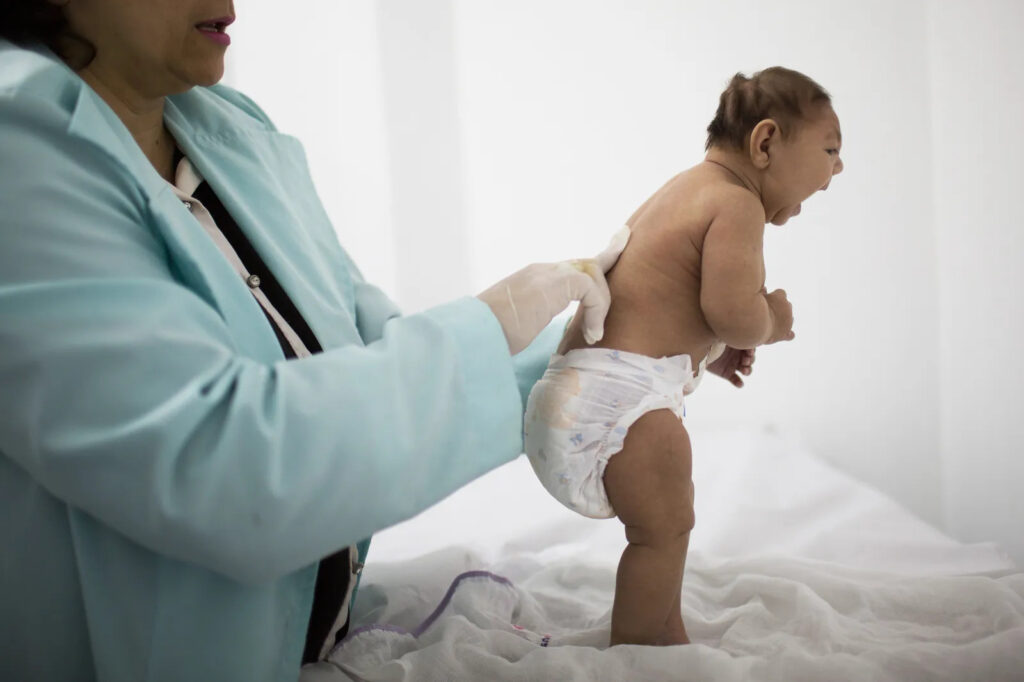
- A small head.
- Receding forehead
- A wrinkled scalp
- The baby cries in a high-pitched voice.
- Seizures
- Intellectual problems
- Lots of hand and leg movements/spasticity.
- Delayed milestones
Microcephaly Signs and Symptoms
- Slow and poor weight gain.
- Poor feeding
- Unstable movement and balancing
- Speech delay
- Intellectual disabilities, for example, severe learning problems.
Co-occurring problems associated with Microcephaly
Based on severity, an individual with Microcephaly can portray other medical issues such as:
- Seizures/epilepsy
- Vision and hearing impairment
- Facial and joint deformities
- Dwarfism
The co-occurring problems are characterized by microcephaly, seizures, and developmental delay (MCSZ). This comes with various outcomes, such as intellectual problems and developmental delay in multiple areas of life. The majority of children with the condition experience seizures occasionally. This makes growth difficult from the initial stages of life. The baby delays in sitting, standing, holding their neck up, eating well, and gaining speech. It’s possible to show behavior issues like hyperactivity and also poor body balance (ataxia).
Causes of Microcephaly condition

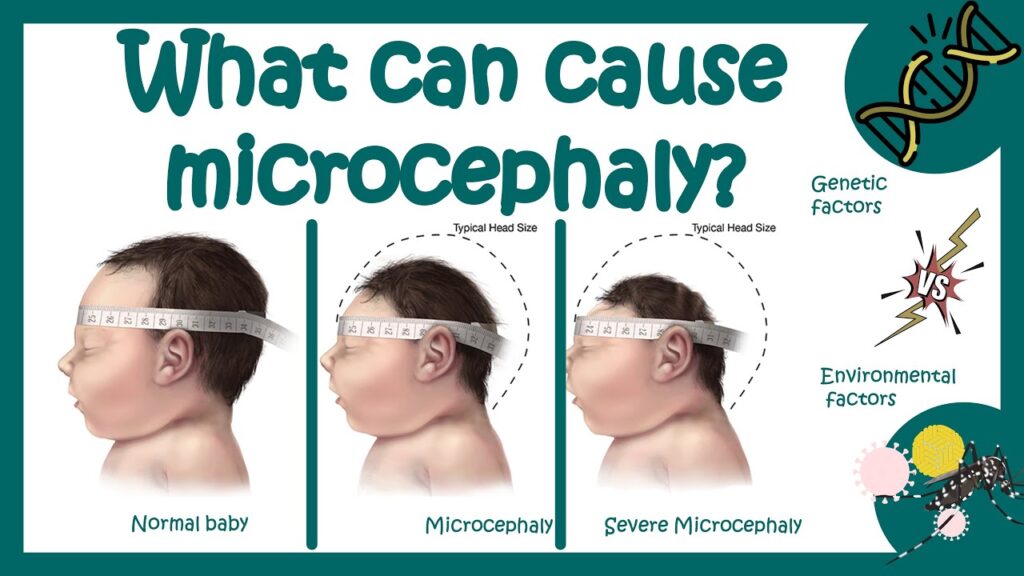
The condition is associated with various causes, which helps one to understand the symptoms. Each cause aligns with how the condition presents itself in each individual. Some show severe development problems, while others have mild effects. Here are different causes:
- Prenatal infections
The prenatal infection is the most common known cause of Microcephaly. Its high associated with the Zika Virus, which is dominant during the first trimester of pregnancy.
About Zika virus: let’s explore more on Zika virus as it’s a high-risk virus that damages the nerve cells or system of the fetus. It affects the immature neurons that are meant to divide and form the fetal brain. Once the cells fail to divide, the brain remains small, which creates the Microcephaly condition.
Research suggest babies exposed to the virus are likely to get Microcephaly. However, not all those affected by the virus get the condition may be due to a strong immune system or genetic factors. Note, children potentially exposed to the Zika virus experience issues like hearing and vision impairment or joint deformations. The cause of the Zika virus is not yet known, and there is no special vaccine to cure the infection. To avoid the virus its advised to avoid mosquitoes that carry the Zika virus.
Other virus/factors
Besides the Zika virus, there are other causes under the prenatal infections, such as:
- Cytomegalovirus
- Rubella (German Measles)
- Toxoplasmosis
- Chickenpox
- Malnutrition
- Exposure to toxic substances
- Decrease in blood supply to the baby’s brain.
- Craniosynostosis.
- Brian injury
- Stroke
- Labor/delivery Complication
- Malnutrition after birth causes slow or no brain and physical development.
- 2. Genetic transformations
In terms of genetic transformation. There are hundreds of genes that are closely related and linked to condition. The astonishing part being that more genes are being discovered and studied. The genes are believed to interfere with the brain, thus causing damage in the cells. Scientifically, Microcephaly maybe related to Down syndrome and other neuro-metabolic issues.
- 3. Other causes
Mothers exposed to toxic substances like alcohol, drugs (hard drugs), or chemicals are also at risk of having a child with Microcephaly. Poor nutrition, untreated phenylketonuria PKU and some medical prescriptions can also cause the condition. Parents need to be cautious during pregnancy to avoid risking the unborn baby.
Primary Diagnosis and Treatment Methods


Microcephaly can occur before and after birth. With condition revolving around neurological issues. One requires a proper check-up to ensure the right diagnosis and treatment are administered.
Diagnosis
Doctors or health specialists will check various angles to get the correct diagnosis. They can assess the following details:
- Go through family history on Microcephaly or related conditions.
- Have a full medical check and physical examination.
- Medical scans that help measure or reveal the head size and its growth during pregnancy. The doctors will compare the size to the average size based on the particular developmental stage.
- Measure parents' head size to check whether it runs in the family.
Doctors can easily detect babies with a congenital type of microcephaly, which forms before birth. An ultrasound in the last trimester. However, it’s not guaranteed that one will identify the condition.
After birth, doctors will suggest tests such as x-rays, CT scans, and MRI. Other genetic test maybe conducted to determine the root cause.
What will happen to my child after diagnosis?
Once the diagnosis happens am sure shock and uncertainty is what will happen. This happens to all parents when a particular disability is mentioned (Me included). However, it’s okay to react and get worried. The diagnosis depends on the symptoms and cause of the condition. With the right details, you can handle any issue that will arise along the new journey.
Parents/guardians should understand that there is no cure for Microcephaly. However, there are therapies that will help the brain. The size of the brain cannot grow anymore, but one can stimulate it to learn simple tasks. According to severity (mild, moderate, and severe), there are treatment/therapies designed for each child.
Microcephaly prevention
Truth is, genetic Microcephaly cannot be prevented. Families can learn about the genetics and inheritance chances to ensure the future children are catered for. People in areas where the Zika virus or other infections are profound can try to prevent/avoid mosquito bites and take proper medication. Mothers using toxic substances can stop and be free of drugs to prevent the development of different disabilities. Eat nutritious food and avoid chemicals that can affect the baby.
Treatment
Microcephaly has no cure; once the brain reaches its limit it can’t grow again. This applies to the head size. Doctors will help parents/guardians manage the symptoms and any co-occurring conditions. Like any other disorder, kids with Microcephaly are unique and cannot be compared or treated with similar support. Parents/guardians and society need to embrace the child/children according to their abilities.
Suppose you baby only has a small sized head and no other condition. He/she will not need any treatments. Children with other issues besides the disorder can avail the following:
- Speech therapy (improve the child’s language, swallowing practices and voice.)
- Occupational therapy to help with daily activities
- Physical therapy to improve movement and fine and gross motor coordination.
- Psychological counselling to help build the child's and parents'/guardians' self-esteem.
Several problems like seizures, deformations, and intellectual conditions are treated separately. Specialized parties will help balance all treatments as the child grows.
Life expectancy of children with Microcephaly
This is a hard one; no one wants to get a life expectancy detail regardless of the severity. However, there is no specific duration. It all depends on the severity and other health issues that a child might have. This can shorten the lifespan, or they can live to the longest.
Support for parents
Besides the child suffering from the disorder, parents go through pain and low self-esteem. They have to cope with society and the expenses that come with Microcephaly. It’s not easy, but it can be shared. Parents/guardians and families going through the condition can seek support groups and learn on how to cope and treat their children.
With support, it’s easy to find professionals who can handle your child and get sessions that align with their needs. One can only think of doctors, but with a strong team, you have teachers, care givers, therapists, and a community that can hold you and your family. Seek a community, families going through the same condition, identify with them becomes an advocate for your child.
How to get the most out of Healthcare support


- Learn about the condition to ensure no wrong information or medication is administered.
- Understand every doctor’s appointment and what is required, and what will happen.
- Have a list of questions you wish to ask the doctor.
- Always write any new treatments, new diagnoses, required tests, and results from the tests and instructions.
- If anything changes, ask questions. For new medicines, ask about the side effects and learn how effective they are.
- Ask if they are new treatment methods.
- Follow up on appointment dates and what will happen in the next visit.
Conclusion
Having Microcephaly isn’t a condemnation; it’s a journey that allows you to take care of a beautiful life. Every child hold great significance and will amount to be a great person in the future. Parents and the community need to embrace the condition and work towards improving the child’s life.

Gladys Njeri Ndungu is a dedicated educator and the founder of Healthy Chic Gazette, a global resource for parenting and kid wellness. With over 10 years of experience since 2012, Gladys is a qualified ECDE teacher with specialized certifications in Special Needs, Child Ministry, and Psychology.
She founded this platform to provide a safe, empathetic space for families navigating everything from Special needs care, gentle sleep techniques and feeding to teenager transitions and home safety. By combining her deep background in child development with modern IT and AI expertise, Gladys helps parents bridge the gap between traditional wisdom and future-ready strategies. Her mission is simple: to empower every parent to raise healthy, well-rounded children with confidence and heart.