
Table of Contents
Matters of the womb can never be fathomed by anyone. Over the course of nine months, multiple developments occur, culminating in the creation of a complete human with incredible features. With all the natural happenings, sometimes come some neurological and neurodevelopmental conditions.
Down syndrome (Trisomy 21) is among the genetic condition that occurs due to a rare cell division. It is a more practical explanation where, genetically, a person is born with one more chromosome within the cell. People without Down syndrome have 23 pairs of chromosomes in each cell of the body, which equals 46. However, an individual with the condition has an extra chromosome 21 that totals 47. The extra pair creates different development changes both in the brain and body.
More on Down syndrome
Down syndrome is a chromosomal condition that calls for more healthcare support based on the individual’s level. The disorder causes intellectual and physical challenges which can be addressed through different interventions.
What is syndrome? These are a combination of symptoms that happen simultaneously. A person with a syndrome has a pattern of issues based on severity. Down syndrome presents multiple symptoms according to the particular individual. Meaning the disorder is unique to each child or person. There are several co-occurring conditions attached to Down syndrome, such as digestive system disorders and heart issues.
A child with Trisomy 21(Down Syndrome) might show mild or severe issues. This equally affects their body and might delay different developments. The condition was recognized by a British physician, John Langdon Down, in 1866. He learned and categorized the symptoms of people with the disorder. However, Dr. Jerome Lejeune produced more studies on Down syndrome, discovering that a person with the issue produced three copies of chromosome 21 rather than two.
Types of Down syndrome

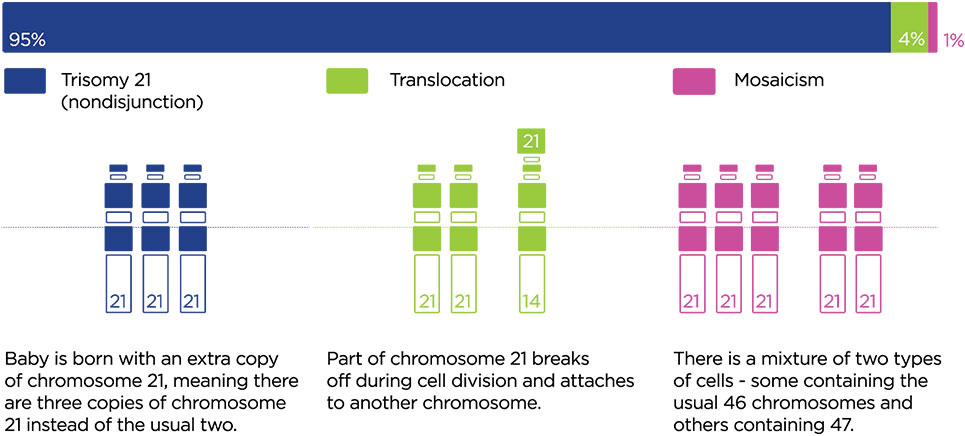
Based on genetics and the formation of cells, Down syndrome can develop in the following forms:
- Translocation Down syndrome.
This means not all chromosomes are in sets of three in the cells of the body. Simple, not all cells have an extra chromosome. Some are partial and others full chromosomes in the cell; this is known as chromosome 14.
- Mosaicism Down syndrome
Mosaic/Mosaicism simply means there is a mixture of two types of cells. One contains 46 chromosomes, and the other contains 47 chromosomes. The 47th chromosome has chromosome 21. The Mosaic Down syndrome is quite rare, with an estimated 2% cases by 2021. People suffering from this type show less symptoms than those in the translocation and Trisomy 21 Non-disjunction.
- Trisomy 21/non-disjunction
Here, a natural error happens when the cells fail to divide, resulting to egg having three copies of chromosome 21 instead of two. This happens in either the egg or sperm, where a pair in chromosome 21 fails to divide creating an embryo with an extra chromosome 21. This is the most common type of Down syndrome (Trisomy 21) globally compared to other types.
What is the main cause of Trisomy 21 (Down syndrome)
First, parents/guardians should understand that they are not responsible. It’s just a genetic factor that one has no control over. A natural process called non-disjunction two chromosome 21 fails to separate as required when the egg (embryo) is being formed. This leaves the egg with two sets of chromosomes in the same egg during fertilization. The baby formed will have three chromosome 21 in each cell.
Note, there is no known cause of non-disjunction. Parents shouldn’t blame themselves for having a child with Trisomy 21, as it’s a natural genetic issue. However, there are factors that increase the chances of having a baby with Down syndrome.
- Age: The mother’s age can contribute to the condition though it’s not conclusively set for all mothers. The majority of women giving birth are under 35 years of age.
- Environmental factors: With research, there is no certainty that Down syndrome is caused by environmental factors. This applies to parent activities or situations surrounding the conceiving since it’s a genetic or cell fusion process. (Needs no research).
Down syndrome is not a specific people disorder. It’s an all-race, intellectual, and economic level problem that can happen anytime. Families need to consult with qualified healthcare personnel to understand every detail. Learn about the age, the possibilities, and if pregnant, constant check-ups on the baby.
Is Down syndrome inherited or hereditary?
The condition is due to genes (genetic disorder). However, with the three types of Down syndrome, Mosaic and non-disjunction disorder don’t relate to hereditary factors. Like no trace of passing the genes to the child. However, for the translocation Down syndrome, there is a one-third (1%) possibility of passing down the gene to the child. For the translocation type, the age of the mother is not a factor, or it’s not linked to the disorder. A parent of a child with the translocation type is likely to have a translocated chromosome.
Main risk factors for Down syndrome
There are a few risk factors for the disorders as follows:
- Consanguinity: (this is the act of being blood related, like sharing a common ancestor or generations). With the hereditary factor in place, the translocation type is common that the children born in such families might have Down syndrome.
- Maternal age of the mother: Age can contribute to getting the condition as age advances, so does the eggs or maternal life gains abnormalities.
- Previous births: in a percentage of 1%, it’s likely (not approved but likely) to have another child with Down syndrome.
- Health issues: Problems like thyroid and leukemia may be associated with increase of/likely hood of giving birth to a child with Down syndrome.
DISCLAIMER
For risk factors and causes, always consult with your doctor or specialist to understand more about the condition. This is an educative well research text (to the best of our ability) and not a diagnosis or treatment of any kind.
Symptoms of Down syndrome

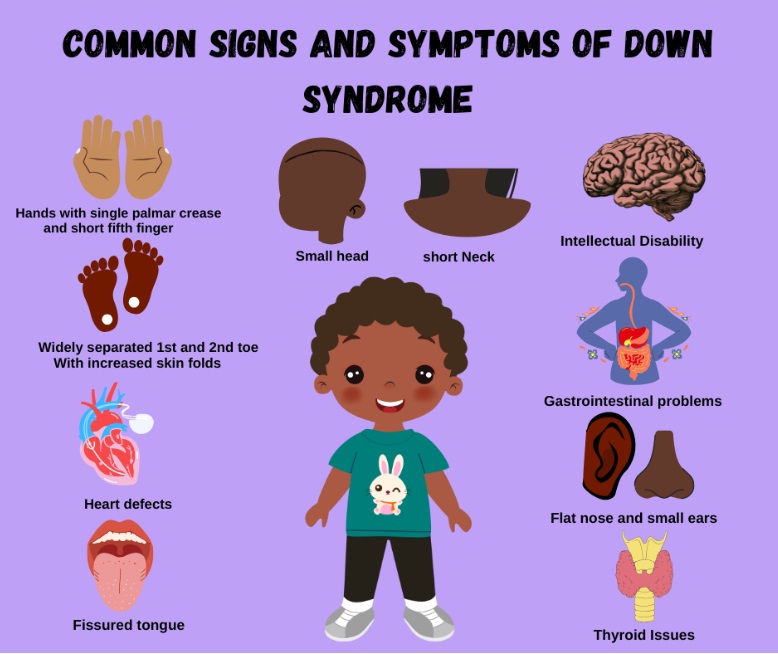
According to the Centers for Disease Control and Prevention, Down syndrome is a genetic condition that affects physical development and learning abilities in children. Down syndrome has a physical, cognitive/intellectual, and behavioral impact. However, the symptoms vary based on severity and person. This makes everyone unique, meaning it’s not a fit for all.
Body/physical signs
The physical appearance is visible from birth and shows more as the baby grows. Remember, Down syndrome is a lifelong condition, thus signs will show in all stages.
- The nose bridge is flat.
- Slanted eyes that point upward.
- Shorter neck.
- Short/small eyes, feet, and hands.
- The majority of babies have weak muscle tone at birth.
- Small, cute fingers that point inwards to the thumb.
- The height is shorter.
- Loose joints or too flexible.
- Have Brushfield spots in the eye.
- Little feet with spaces between the toes.
- The tongue appears to stick out of the mouth.
- A crease that runs across the palm and another down the thumb. A normal hand has three creases on the palm.
Cognitive signs
The condition comes with intellectual disability, thus delaying some milestones. This doesn’t mean the child isn’t functional, but they delay in what other normal kids do at particular stages. Note, children with this condition tend to have great life in different fields. The child may experience delays in the following areas:
- Walking and moving around.
- Language development
- Cognitive skills/learning.
- Social and emotional interaction.
This delays the following:
- Takes time in toilet training
- Difficulty in speaking
- Hard time walking
- Problems with eating
Behavioral signs
Due to some difficulties, such as language, children with Down syndrome behave differently. They might portray symptoms such as:
- Tantrums
- Poor attention
- Compulsive behaviors.
Medical tests and Diagnosis
The National Down Syndrome Society explains that children with Down syndrome can lead fulfilling lives with proper medical care, education, and family support.
Can Down syndrome be detected before birth?
With high-quality technology, healthcare personnel can detect Down syndrome during pregnancy. A mother will take some screening test (prenatal and diagnostic test) which will help analyze the child’s situation.
- Prenatal screening

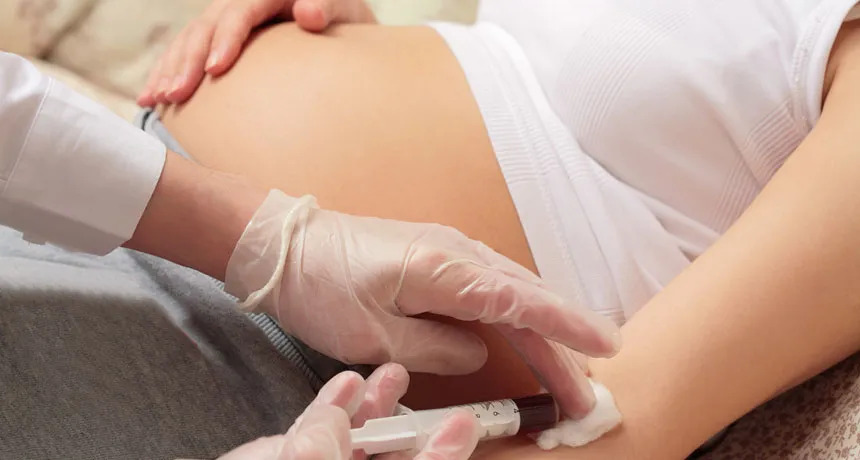
The prenatal screening is done to help in detecting and assessing potential risks of developing the condition. It’s done to give confirmation of the disorder rather than the diagnosis. This type of test is done through a blood test of the mother.
Doctors may also conduct an Ultrasound to detect any signs of Down syndrome. Signs like excess fluid behind the baby’s neck might be an indicator of the presence of the condition. However, the test may not show any signs though the baby will get the condition.
- Diagnostic test
A diagnostic test during the pregnancy phase gives confirmation of the disorder. The test is done once the screening test shows positive results. The test includes:
- Amniocentesis
- CVS or Chorionic Villus Sampling.
- PUBS Percutaneous Umbilical Blood Sampling.
The test are able to detect chromosomal change which leads to the condition.
Down syndrome diagnosis after birth
After birth, it’s easier to detect any abnormalities with the baby. Health practitioners are able to check on physical signs of Down syndrome. A blood test will also apply (Karyotype test), where the sample will be checked under the microscope. Here, the sample will show any traces of chromosome 21 (extra chromosome).
After the diagnosis
Once a full diagnosis is done, the health provider will guide you on what to do in terms of health and resources. It’s wise to enroll parents/guardians to counselling groups or support groups to help in coping with the new situation. Truth is, some receive the news as shocking and feel it’s unfair. It’s a feeling every family encounters when disability news is introduced.
The counselling sessions help the parent to heal and learn about the problem. It’s easier to carry the burden once you know you have a community backing your struggle. The sessions allow acceptance and create joy amidst the frustrations.
Treatment and management
Parents/ guardians, families, and the community should understand that there is no specific cure for Down syndrome. It’s a condition one has to grow up with into adulthood. However, there are several management and treatment strategies that help one to cope.
- Physical/occupational therapy.
The physical therapy works on the motor development of the child. This starts almost immediately, with the baby expected to have various body controls like moving the neck and head. They need to learn to sit with a good posture and enough strength to support their bodies. A child with Down syndrome may have some muscle difficulty, thus dragging the physical development.
- Speech therapy
With early intervention, it’s easy to help a child with the condition learn language. A language therapist will help in echo sounding, imitating, turn-taking, visual skills where the child looks and imitates the speaker, auditory skills, music, fine motor use, and more. At the infancy stage, the speech trainer will help in breastfeeding training since it involves some anatomical parts that enhance the jaws and facial muscles.
- Occupational therapy
Occupational therapy aligns with physical therapy. Children learn and master independence skills. They can build blocks, pick stuff, and try activities like coloring, feeding, interaction with others, and more.
Medical conditions that co-occur with Down syndrome
The condition may co-occur with other medical issues, which are also manageable. Parents need to regularly check for different signs to ensure they capture everything in the initial stages.
- Low concentration and intellectual disability
- Thyroid
- Lethargy
- Dental problems
- Seizures
- Endocrine issues
- Weight gain
- Skin problems
- Low cold tolerance
- Vision and hearing impairments.
- Sleep apnea
- Fertility
My take
Actually, there is no lesser disability. The confusion and wonder of ever making it work is experienced by all families taking care of a child with disability. With Down syndrome comes some responsibilities. However, my call is to love yourself first. Parents/guardian love yourselves pat your shoulder know you are a hero. Just accepting to carry the responsibility and love your baby, you are a hero. Cry when needed, but laugh and love always. It’s not easy for me its dyslexia, but I laugh and love my child we are conquerors. Ask for help when you feel overwhelmed, take rest, cry, and enjoy every bit of this life.

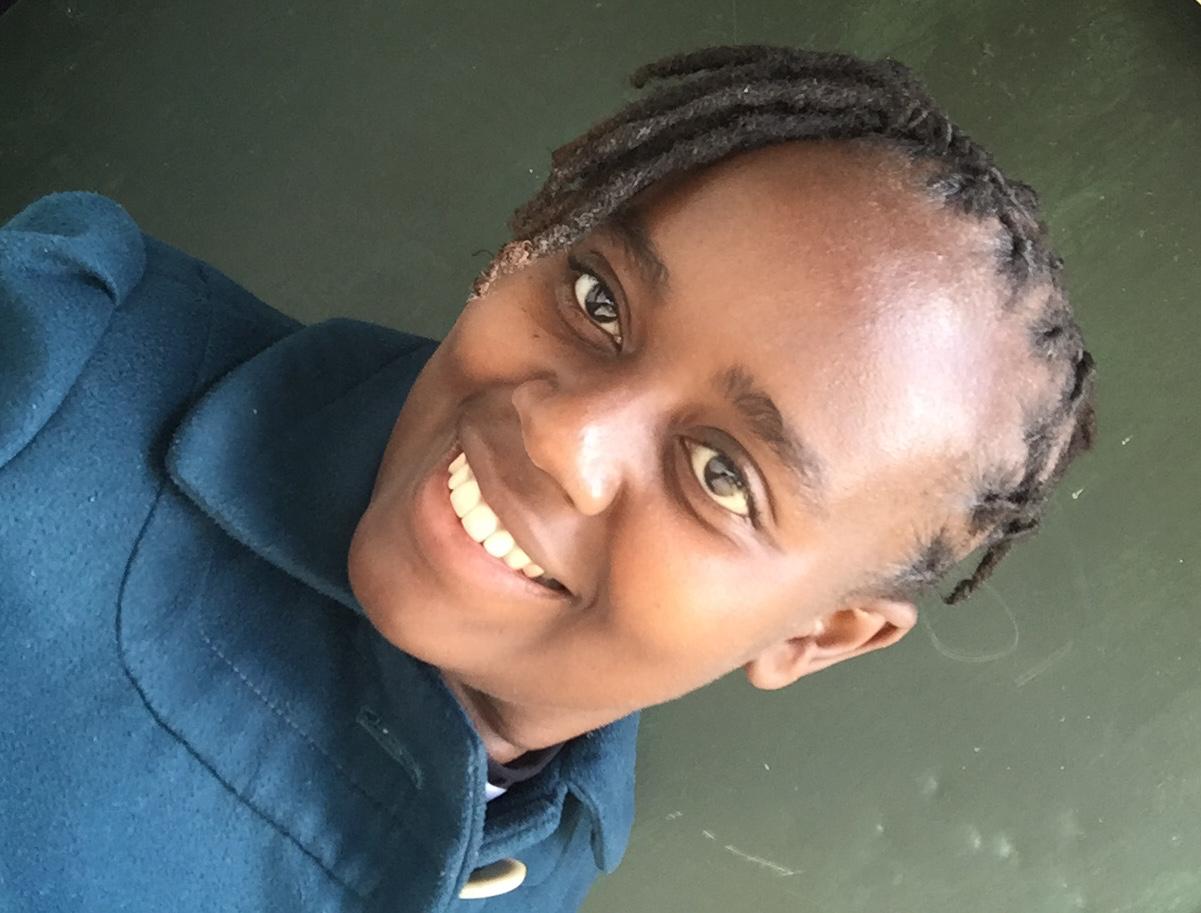
Gladys Njeri Ndungu is a dedicated educator and the founder of Healthy Chic Gazette, a global resource for parenting and kid wellness. With over 10 years of experience since 2012, Gladys is a qualified ECDE teacher with specialized certifications in Special Needs, Child Ministry, and Psychology.
She founded this platform to provide a safe, empathetic space for families navigating everything from Special needs care, gentle sleep techniques and feeding to teenager transitions and home safety. By combining her deep background in child development with modern IT and AI expertise, Gladys helps parents bridge the gap between traditional wisdom and future-ready strategies. Her mission is simple: to empower every parent to raise healthy, well-rounded children with confidence and heart.