Table of Contents
Speaking from a parent’s perspective. It’s never easy when a new development comes up with your baby. Congratulations on having a baby boy/girl, but we have noticed that this or that never settles well. There is always panic and worry of not just that particular moment, but the future. Raising a child with any condition is overwhelming, but also a hidden gem of happiness and learning. With cerebral palsy being our condition today, we learn, understand, and take the journey with ease.
About Cerebral Palsy
Cerebral Palsy is a cluster of group of neurological conditions that have an impact on muscles, body posture, and coordination. The condition is brain-related as it occurs due to brain injury or abnormal development. This can happen before, during, or shortly after birth. Individuals with CP have difficulty with muscle movement and balance.
The term cerebral palsy is a combination of the brain and muscles. Cerebral refers to the brain, and palsy means a weakness or issue with the muscles. Though CP affects muscle ability and coordination. The condition doesn’t worsen over time or over the individual’s lifetime. However, Cerebral Palsy may cause some permanent disabilities. This may lead to physical challenges as the child grows.
Note, the disorder has different impact levels from mild to moderate to severe based on the brain injury or abnormality. Statistically, CP affects 17, 000 000 (plus) people globally. The disorder has no specific race or gender. There is no cure, but there are various treatments that focus on managing and improving one’s livelihood. With the right care and team, it is easy for the child and adults living with CP to have a comfortable life.
Co-occurring Conditions with Cerebral Palsy

Cerebral Palsy can occur with other impairments and disorders like:
- Visual and hearing impairment.
- Seizures
- Communication issue
- Sensory disorders
- Digestive system problems
- Scoliosis
- Mental health problems
- Chronic pains.
Parents/guardians need to check every development stage to ensure they cater to all problems. Having a healthcare team really comes in handy as it helps evaluate the issues and provide the right treatment.
Cerebral Palsy causes
There may be no known cause for CP. However, it’s believed some triggers causes may include brain injury or abnormal development, according to the National Institute of Child Health and Human Development.
- Change in blood flow,
- Maternal infection,
- Intrauterine stroke,
- Genetic
- Injury (during and shortly after birth).
There is no specific cause, but specialists are still learning to understand CP and its root causes.
Types of CP (Cerebral Palsy)
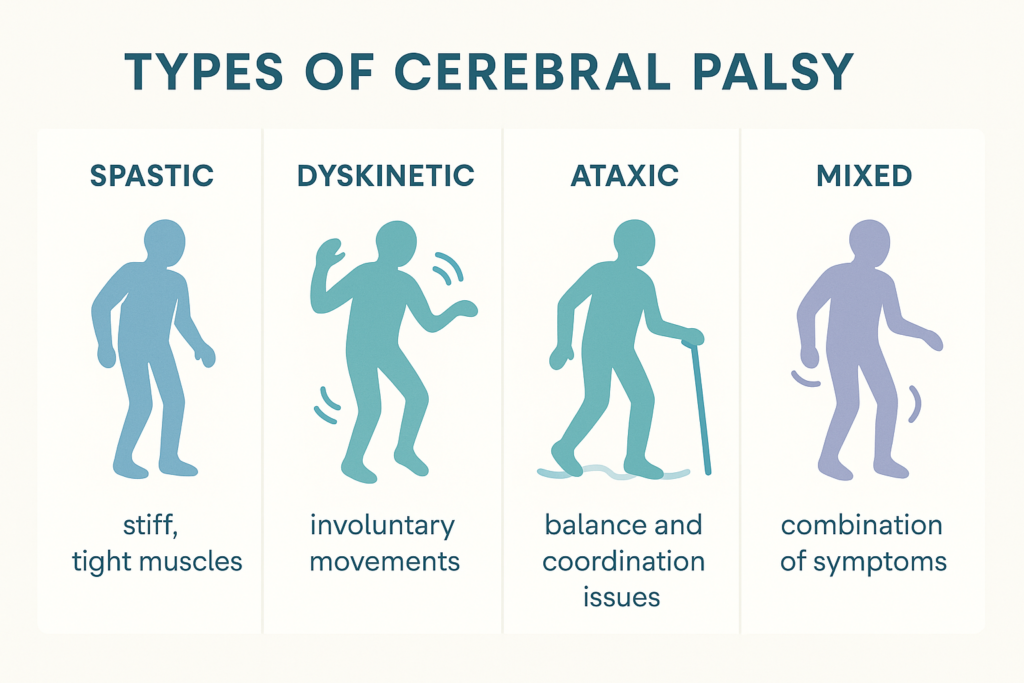
CP condition can be classified into several types based on the symptoms or movement issues one displays. Muscle movement and coordination are predetermined by the different parts of the brain. Doctors classify each type depending on the affected area.
- Spasticity/spastic or stiff muscles
Spastic CP is experienced by a high number of children globally. Individuals with spastic cerebral palsy have increased muscle tone, which causes stiffness. This results in awkward movement and coordination. To understand the specific spastic CP a child or adult has, one can assess which part of the body is affected as follows:
CP impacts the body (Affected parts of the body)
- Hemiplegia/Hemiparesis/Unilateral: This type of Spastic CP affects one part or side of the body. Here, the arm might be more severely affected than the leg. This can happen to either the left or the right.
- Spastic diplegia or diparesis: The main affected areas are the legs. The condition can slightly affect the arms or not affect them at all. The muscle stiffness causes the legs to pull together (turning inward) due to the tight hip section. This makes the knees cross, forming a scissoring angle, making it difficult to walk.
- Spastic Quadriplegia/Quadriparesis: In the spastic CP, this counts as the most severe type of cerebral palsy. It’s a comprehensive type that affects all four limbs, the face, and the trunk. Children and adults with Quadriparesis have other co-occurring issues such as vision and hearing impairment, speech, seizures, and intellectual disability.
2. Dyskinetic Cerebral Palsy
Dyskinetic is another type of CP disorder that is quite evident due to the body movement. With Dyskinetic the body moves uncontrollably and simultaneously. The hands, feet, arms, and legs are difficult to control, making it hard to sit and walk. There are three types of CP under Dyskinetic:
- Athetoid
- Choreathetoid
- Dystonic
The body moves in slow, rapid, or jerky motions depending on the type. Dyskinetic CP also affects the face and the tongue. This causes difficulty in eating/swallowing, talking, and sucking. This may cause drooling due to loose muscles. The condition might change the muscle tone from too tight to too loose at any time.
3. Ataxic Cerebral Palsy
Ataxic CP comes with balance and coordination issues. The child or adult cannot walk steady and might find it hard moving or working fast. They need to focus and take time to work on simple activities such as writing or reaching for things.
4. Mixed Cerebral Palsy
It’s likely to develop symptoms of different types of CP. Some individuals display symptoms of Dyskinetic and Spastic.
Note, CP effects are different and unique to every affected person. With some having intellectual disability, others are perfectly fine. Some may have issues with walking and will need assistance, but others are fine. The disorder has no cure, and there are several treatments that help ease the effects and improve one’s lifestyle. The condition is a one-time issue; the brain development problem doesn’t accelerate or get worse with time.
Signs and Symptoms of Cerebral Palsy
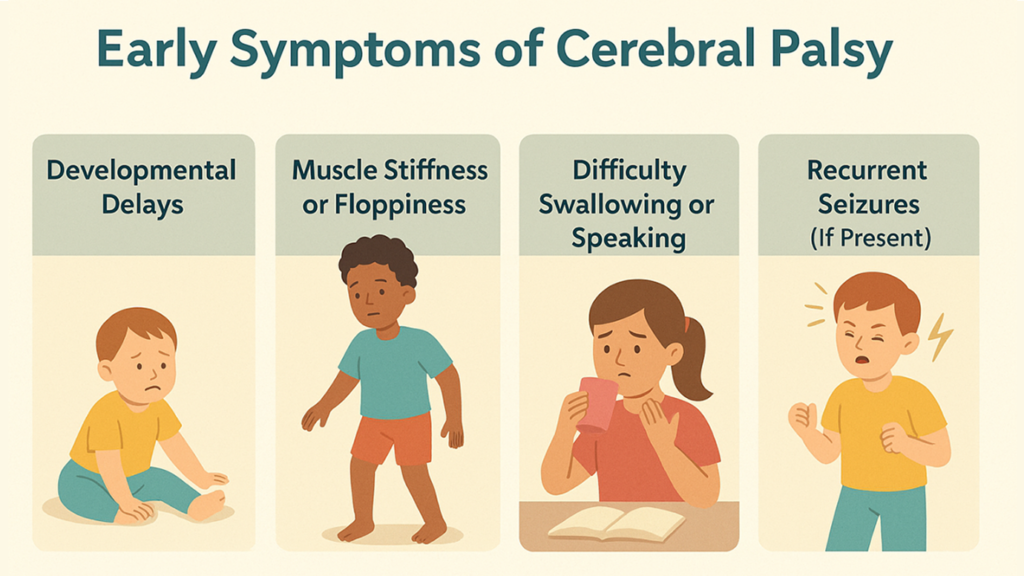
CP symptoms vary based on the type of disorder and the severity. However, movement and coordination problems are general for all types of CP.
Muscles
- Stiff muscles, exaggerated and uncontrolled movements.
- Muscle tone variations too stiff or too floppy.
- Irregular reflexes.
- Lack of balance and coordination.
- Slow writhing or rapid jerks.
- Walking difficulty: walking in a crouched down posture
- Scissor or knees crossing.
- Problems with easy activities such as buttoning, reaching out for things, writing, etc.
Speech
- Difficulty in articulating words.
- Speech development delays.
- Problems in suckling, swallowing, and eating.
- Drooling
Developmental delays
- Intellectual and learning disabilities.
- Slow or delayed motor skills
- Delayed growth
Co-occurring issues
- Hearing and Vision issues
- Seizures (sometimes epilepsy).
- Trouble with pain or sensations.
- Gut problems like constipation and urinary issues.
- Mental health issues.
Some children with cerebral palsy may develop movement disorders such as dystonia, affecting muscle control and posture.
Potential Risk Factors for Cerebral Palsy
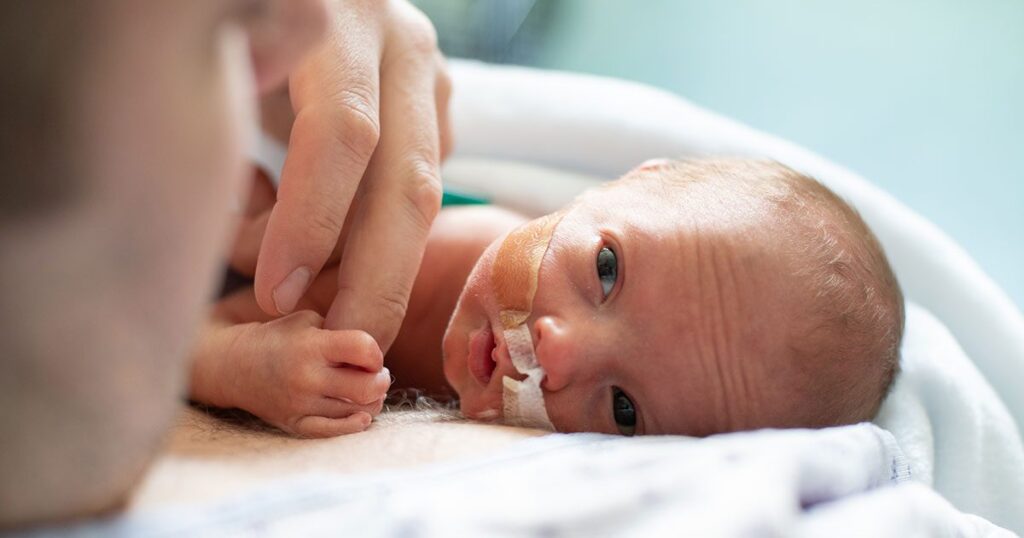
Besides the known causes of CP, there are factors that increase the chances of having a child with CP. These are the risk factors that might trigger the condition. However, it’s not guaranteed that a child will have Cerebral Palsy due to the risk factors.
Congenital CP risk factors
- Low birthweight
Babies are born at a particular weight, which is considered safe and okay at birth. However, if a child weighs less than normal, maybe 3 pounds, 5 pounds, or 8 pounds at birth, they may be at risk of developing Cerebral Palsy.
- A premature birth
Suppose a child is born before the 37th week of the pregnancy (From 32 weeks and below). The baby might have a few complications and is likely to get CP. However, not all preterm babies develop neurological or neurodevelopmental issues. The shortened gestation period counts as a potential risk.
- Multiple births (twins, triplets, Quadruplets…)
Multiple births are great, but sometimes a high risk and prone to various developmental issues like CP. The majority of babies in multiple births are either born before time or underweight. In most or probably few (remember it’s not a cause but a risk factor) they are likely to develop Cerebral Palsy.
- ART Assisted Reproductive Technology (Infertility treatment)
Parents/guardians, if the fertility treatment is the only option, don’t worry. It’s not a guarantee that your baby will have any issues. However, some infertility treatments can increase the chances of having the disorder.
- Infection during pregnancy
The pregnancy journey comes with different infections which should be treated accordingly to avoid health issues for both mother and baby. Infections are associated with some proteins (Cytokines) that are believed to circulate in the baby’s blood stream and brain during the gestation period. Infections such as rubella, Cytomegalovirus/CMV, and chickenpox are highly believed to cause CP. We also have bacterial infections like placental infections, maternal pelvic infections, and fetal membranes also linked to the condition.
- Kernicterus /Jaundice
Many babies develop Jaundice at birth or shortly after, maybe a few days. This is the yellow pigment that shows on the skin and eyes. It’s treatable with the right medication if noticed at the right time. Untreated Jaundice causes a condition, Kernicterus, which can also happen due to RH blood types or ABO. However, prolonged jaundice increases the chances of having CP.
- Mother's health conditions
Suppose a mother suffers from a health issue like thyroid or other neurological or particular disability. They are at risk of bringing forth a baby with Cerebral Palsy. (It’s a likelihood of a risk factor).
- Complication at birth
Since CP is a result of abnormal brain development, damage or injury during birth or shortly after birth. Birth complication are part of the contributing factors to the condition. Incidents like lack of oxygen, issues with the umbilical cord, or placenta detachment, and more.
Some children with cerebral palsy also experience epilepsy, which may require additional medical management.
How can we prevent CP before, during, and after birth?
Cerebral Palsy can happen anytime before, during and after birth. It’s never parents' fault since we all want the best for our children. However, the risk factors and causes show what might cause the condition. It’s wise to try to prevent some of the factors.
Note, the real cause of CP is not yet known. We cannot pinpoint a particular reason, meaning we have no direct prevention aspect. Some genetic causes cannot be prevented, but other causes and factors can be avoided or checked before pregnancy. Early treatment can improve quality of life, as highlighted by the Cleveland Clinic.
Parents/guardians can check out the following:
- Before conceiving
Couples or individuals planning to have a baby need to check out their healthy to ensure they are fully fit for the journey.
- A mother needs to check for infections, and if any are found, they can take treatment. One can also check for other health issues to avoid complications during the pregnancy.
- Through the doctor’s advice, get vaccinations for infections and diseases like rubella.
- For families considering ART or infertility treatment. They can consider one embryo rather than multiple to minimize the risks.
2. During the Pregnancy
- As a mother, consider early prenatal care. This helps detect any issues early and allows for fast intervention.
- Always visit or contact your prenatal care team if you notice anything abnormal.
- Keep a healthy and clean habit to avoid infections.
- Having a flu injection will help reduce or eliminate flu during pregnancy.
- A proper blood work to understand your blood group is key. This prevents issues with RH.
After birth
After the baby is born, one might feel they are out of danger. However, it is wise to follow up with the healthcare team to ensure no medical issues arise. One should check for Jaundice by taking a bilirubin test to ensure the baby is in the clear. Note, severe Jaundice can affect the brain, causing Kernicterus, which is a high-risk factor for CP.
Parents/guardians should strictly follow the vaccination procedure to avoid infections, such as meningitis, Streptococcus pneumoniae, and encephalitis.
In summary:
- Check for Jaundice and take proper treatment if discovered.
- Make sure the baby gets vaccinated on time.
- Avoid head injuries.
- Always supervise you baby around pools or water areas to avoid drowning.
- Have a safe sleeping area and play areas to avoid choking. Lack of oxygen due to choking or drowning can cause brain damage.
Could I have done anything to avoid Cerebral Palsy? (My perspective)
As a parent, I really wonder if we did anything wrong and if we could have avoided the condition. In some instances, yes, but in others, no. Sometimes accidents happen and lifetime injuries occur. However, speaking from the point of view of a fellow parent and professional. It’s more painful to follow and place blame than to take care of your baby.
I understand one can take legal action if it were cases of negligence. But every child is a special gift, don’t be too hard on yourself. You are doing perfectly fine being there and helping with the skills and care. I believe every parent is a hero; everyone has a difficult situation they are dealing with. I know it’s hard, but you are strong, and your child or children are unique. (My perspective)
Parents seeking information about childhood disorders and developmental conditions may also find our child health and medical conditions guide helpful. The guide provides an overview of common medical, neurological, and developmental conditions affecting children and links to additional resources for families.

Gladys Njeri Ndungu is a dedicated educator and the founder of Healthy Chic Gazette, a global resource for parenting and kid wellness. With over 10 years of experience since 2012, Gladys is a qualified ECDE teacher with specialized certifications in Special Needs, Child Ministry, and Psychology.
She founded this platform to provide a safe, empathetic space for families navigating everything from Special needs care, gentle sleep techniques and feeding to teenager transitions and home safety. By combining her deep background in child development with modern IT and AI expertise, Gladys helps parents bridge the gap between traditional wisdom and future-ready strategies. Her mission is simple: to empower every parent to raise healthy, well-rounded children with confidence and heart.